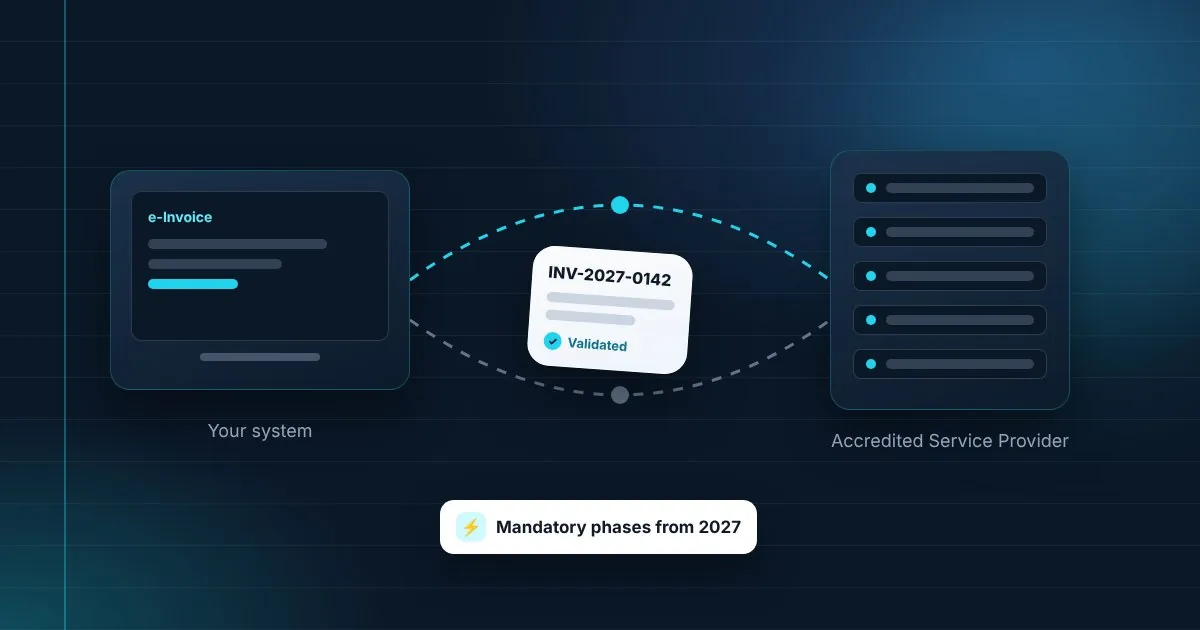
The UAE Ministry of Finance has set out the framework for a national Electronic Invoicing System through Ministerial Decisions No. 243 and 244 of 2025. A pilot programme started on 1 July 2026, and mandatory implementation is being rolled out in phases based on business size, starting with the largest businesses.
What changes?
E-invoicing is more than emailing a PDF. Invoices and credit notes will be issued in a structured electronic format and exchanged through Accredited Service Providers (ASPs), with the required data shared with the tax authority. Businesses will need to appoint an ASP and make sure their accounting or ERP system can produce compliant invoices.
Steps to take now
- Confirm which implementation phase applies to your business and its deadlines
- Review your current invoicing process and accounting software
- Clean up customer and supplier master data, including TRNs
- Talk to your software provider about e-invoicing readiness
- Plan the appointment of an Accredited Service Provider
- Train your finance and sales teams on the new process
Why your books matter
E-invoicing makes errors visible faster. Businesses with clean, up-to-date books will find the transition far easier than those catching up at year end.
Timelines and requirements are set by the Ministry of Finance and may be updated, so check the latest official guidance or speak to us about how the rollout affects you.